The Cost of Not Understanding Inflation
Imagine having to turn down extra tutoring before your exams, delaying the purchase of a textbook, or reconsidering your university options because the costs suddenly became harder to afford. For many students, these are no longer hypothetical situations. They are the quiet consequences of inflation.
Inflation is usually discussed through percentages, graphs, and economic forecasts. It appears in central bank reports and news headlines, often presented as a statistic to monitor rather than a reality to experience. Yet for millions of students around the world, inflation is far more personal. It can influence what resources they have access to, the opportunities available to them, and, in some cases, whether they can continue their education at all.
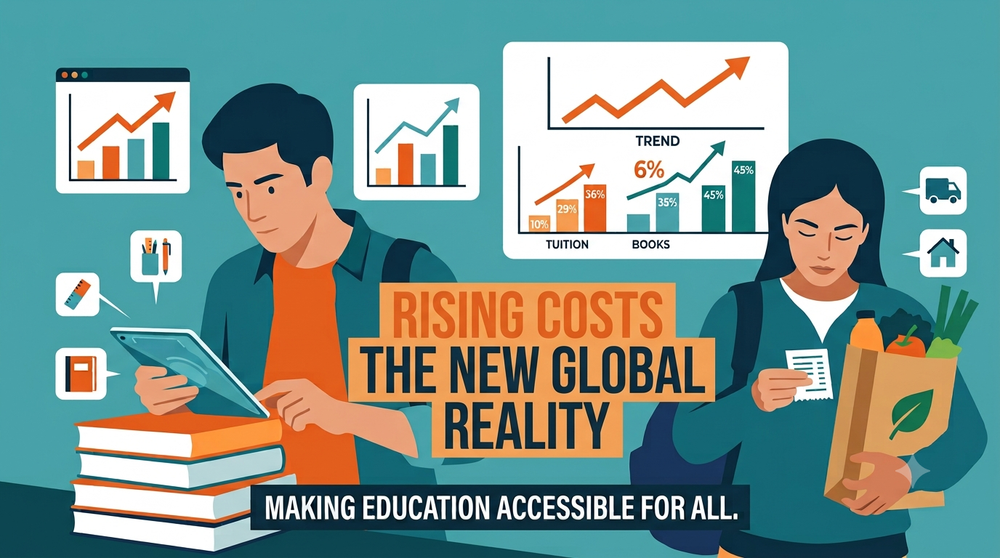
When prices rise, education becomes more expensive too. School supplies, transport costs, internet access, examination fees, and tuition all become harder to afford. For some families, these increases may simply mean adjusting a household budget. For others, they can lead to difficult choices. A small price increase on paper can gradually become an obstacle to learning. Over time, higher prices can quietly translate into fewer opportunities, widening inequalities that often persist long after school.
The United Nations recognises quality education as one of its Sustainable Development Goals (SDG 4), to ensure inclusive and equitable education for all. However, economic pressures continue to make that goal more difficult to achieve. According to the United Nations Educational, Scientific, and Cultural Organization (UNESCO), approx 251 million children and young people were out of school globally in 2023. While there are many factors behind this figure, financial hardship remains one of the biggest barriers to education.
What makes inflation particularly challenging is that it does not affect everyone equally. Higher-income households are better equipped to manage rising costs, while lower-income families often experience a greater reduction in purchasing power and have to make significant trade-offs. As household budgets become strained, spending on educational resources may be reduced. Tutoring, learning materials, reliable internet access and extracurricular opportunities are slowly becoming luxuries rather than resources for learning.
It is easy to assume this is only an issue in developing countries, but the reality is much broader. Across the world, rising living costs have intensified discussions around student debt, university affordability, and unequal access to educational support. The Organisation for Economic Co-operation and Development (OECD) consistently finds that socioeconomic background remains one of the strongest predictors of educational outcomes. When inflation rises, existing inequalities often become even more visible.
This is where organisations such as ZNotes become particularly valuable. Access to education should not depend entirely on a family’s financial circumstances. By providing free educational resources to students across the world, ZNotes helps reduce barriers that economic challenges can create. At a time when costs continue to rise, ensuring that knowledge remains accessible is more important than ever.
Inflation may be measured through percentages, but its consequences are ultimately human. Behind every statistic are students trying to stay on track, families adjusting their budgets, and communities working to preserve opportunities for the next generation. Making education accessible is not only about reducing financial barriers but also about ensuring that knowledge remains within everyone’s reach. That is precisely why initiatives like ZNotes matter.
Sources
Organisation for Economic Co-operation and Development. Education at a Glance 2024. OECD Publishing, 2024.
United Nations. Sustainable Development Goal 4: Quality Education. United Nations, https://sdgs.un.org/goals/goal4.
United Nations Educational, Scientific, and Cultural Organization. Global Education Monitoring Report 2024. UNESCO, 2024.