
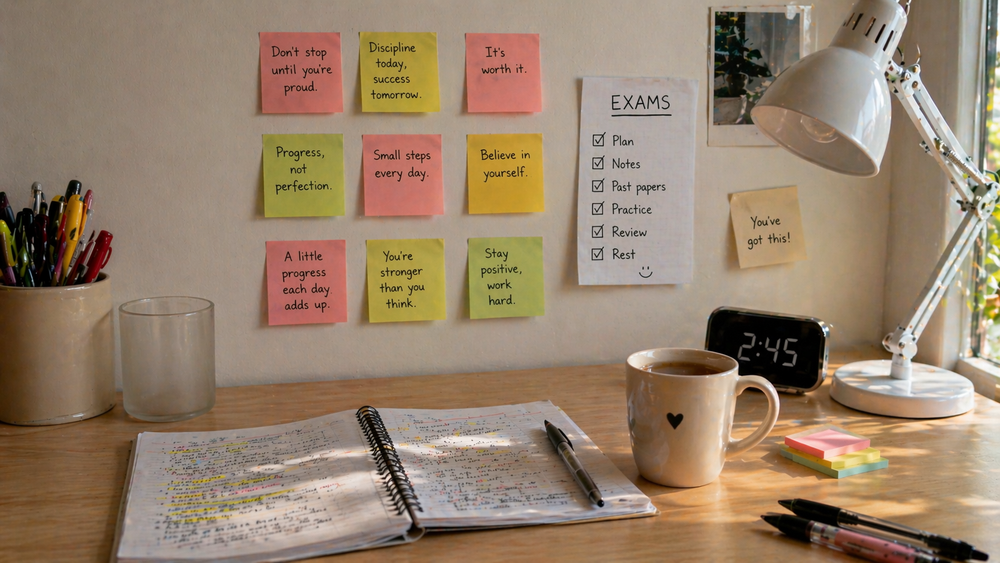
Managing Exam Stress and Taking Back Control
Imagine, you’re in a familiar room, seated at a desk you’ve seen many times. An exam paper sits in front of you and, with confidence high, you begin writing effortlessly.
A teacher is staring right at you.
“Five minutes left.”
You look down, but your answers are gone. You try to write again, but the words disappear like they never existed. Your hands start shaking, your mind goes blank, your heart races... and suddenly, you wake up.
It’s 3:32 a.m.

Sound familiar? This is what peak exam stress looked like for me as deadlines closed in. Looking back, it almost feels surreal, but it made me realise how much power stress can have if left unchecked.
When Confidence Turns Into Doubt
I’ve always believed the brain works strongly on belief. What you tell yourself can shape your limits, either into a strength or an obstacle. During exams, that belief often turns into doubt. Even when I knew I was prepared, the “what ifs” didn’t go away: What if I can’t answer? What if I fail? What if all that effort means nothing? What if I disappoint everyone?
Normal Stress vs Harmful Anxiety
To understand this better, it’s important to recognise the difference between normal stress and excessive anxiety. Everyone feels nervous before an exam, it’s natural. In fact, a little stress can push you to work harder and stay focused. I’ve experienced that myself, using pressure to get through long study sessions.
But there’s a point where it becomes too much. When you start
- overthinking, constantly
- feeling guilty for resting
- Becoming physically drained
...that’s when stress stops helping and starts holding you back. It makes you doubt your abilities and traps you in a cycle of negative thoughts.
How Stress Affects Performance
This kind of tension affects more than just your mood. Sleep suffers, focus drops, and motivation fades. I remember having vivid dreams about everything going wrong, answers disappearing, forgetting everything, even unrealistic scenarios. It left me exhausted and unable to concentrate on what actually mattered.
What Helped Me
Over time, I found small ways to manage it.
1. Challenge Negative Thoughts
One method that helped was actively challenging negative thoughts. If I caught myself thinking, “What if I fail?”, I would consciously replace it with a better outcome. It wasn’t easy at first, but over time, it helped shift my mindset and rebuild confidence.
2. Use Active Recall
Uncertainty is another major source of stress—whether it’s topics you didn’t revise enough or questions you think you got wrong. For this, I found active recall to be especially useful. It forces you to test what you actually remember, strengthening your understanding and reducing doubt.
3. Feel It - Then Reset
One idea might sound unusual: sometimes, it helps to let yourself feel overwhelmed, but only for a short time. Give yourself five minutes to feel everything, stress, fear, frustration. Don’t hold it in. Then, move on. Reset, refocus, and continue. It gives your mind space to process emotions without letting them take over.

Final Thoughts
In the end, stress, anxiety, and uncertainty are all natural responses to something important. They only become a problem when they control you.
Mistakes don’t define failure, they show that you’re trying. What matters is learning from them.
Everyone has their own path, their own pace, and their own challenges. While others may only see your results, you understand the effort behind them.
At the end of the day, you’re not competing with everyone else, you’re competing with yourself. And once you realise that, the pressure starts to feel a little lighter.